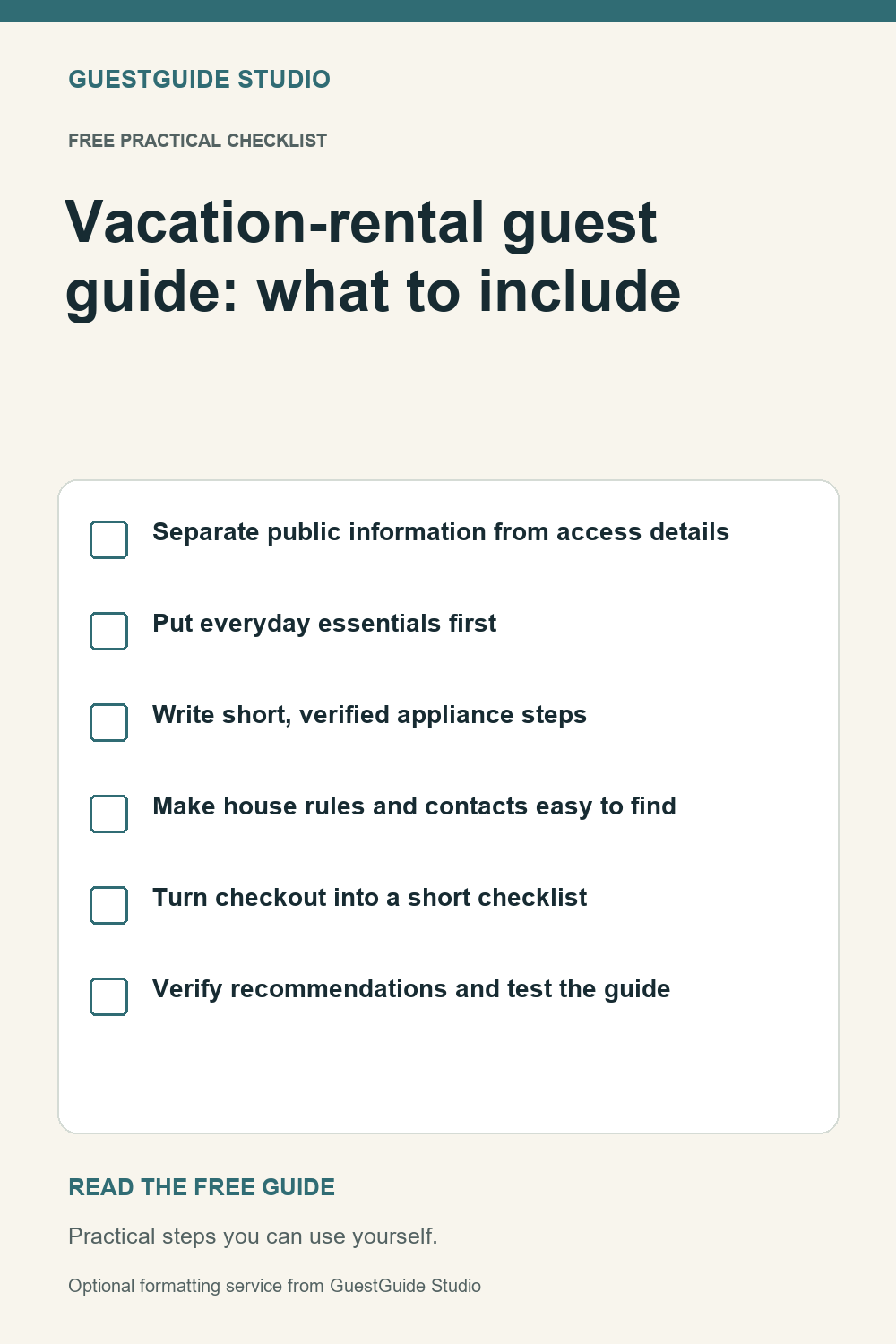
1. Separate public information from access details
List the information a guest needs before arrival, on arrival and during the stay. Keep door codes, private contacts and other sensitive access information out of public samples or marketing pages. Share access details through your approved private guest channel.
- Confirm the property's correct address and arrival window.
- Explain the approved parking location.
- Identify which details change for each reservation.
2. Put everyday essentials first
Group the answers guests are likely to need immediately: how to connect to the guest network, where to find supplied essentials and how to reach the host. Use clear labels rather than long welcome paragraphs. Test the actual instructions at the property before adding them.
3. Write short, verified appliance steps
For an unfamiliar appliance, give one action per step and name the control the guest will see. Follow the property's approved instructions and manufacturer information. Do not invent a procedure when a setting or safety detail is unclear.
- Include a useful photo if you own the image rights.
- Explain how to return the appliance to its approved state.
- Flag unresolved instructions for the host before sharing.
4. Make house rules and contacts easy to find
Use your approved rules consistently with the booking information guests already received. Put relevant contacts in a labeled section and verify the numbers. Keep emergency information supplied or verified by the responsible host clear and prominent; a guide is not an emergency monitoring service.
5. Turn checkout into a short checklist
State the approved checkout time and only the actions actually required. Put tasks in a practical order and distinguish required steps from optional courtesies. Check that instructions about keys, doors, waste and appliances are consistent throughout the document.
6. Verify recommendations and test the guide
Choose a small number of local recommendations you can stand behind. Check each business name, location and link; date information that may change. Avoid unsupported travel times or promises about availability. Open the finished guide on a phone, tap every link and ask someone unfamiliar with the property to follow it.
- Remove references to closed or unverified locations.
- Keep a printable quick-reference page for essentials.
- Save an editable master and review it when property details change.